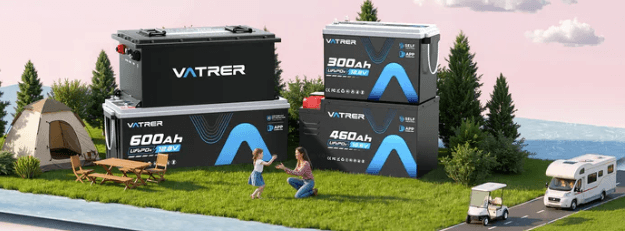
A 12V lithium battery built on LiFePO4 chemistry has quickly become the go-to upgrade for anyone who needs dependable, lightweight, and long-lasting energy. From trolling motors and fish finders to RV inverters, golf carts, and compact home energy storage, this battery format delivers stable voltage, fast recharging, and thousands of deep cycles with minimal maintenance. The payoff is simple: more usable energy per pound, faster turnarounds between adventures, and a consistent power profile that keeps electronics happier. The right 12V lithium pack, matched with a robust battery management system (BMS), can transform the performance and reliability of virtually any 12-volt setup.
Why a 12V LiFePO4 Battery Outperforms Lead‑Acid
The defining advantage of a 12V LiFePO4 battery is usable capacity. Traditional flooded or AGM lead-acid batteries typically allow only about 50% depth of discharge (DoD) without significantly shortening lifespan. A high-quality LiFePO4, by contrast, can deliver 80–100% of its rated capacity safely, turning a nominal 100Ah pack into as much practical energy as two comparable lead-acid units. This translates into fewer batteries, less weight, and more room for gear—crucial on a fishing boat, in a compact RV bay, or under a golf cart seat.
Cycle life is another headline benefit. While lead-acid deep-cycle units might offer a few hundred cycles before noticeable degradation, a modern 12V lithium battery commonly achieves 3,000–5,000 cycles at 80% DoD—often more with careful charging. Over time, that durability reduces replacements and labor while maintaining consistent performance. Pair this with a flat discharge curve—LiFePO4 holds voltage steady through most of the cycle—and motors, lights, fridges, and sensitive electronics see fewer brownouts and smoother operation.
Weight and charging speed seal the deal. Lithium iron phosphate delivers higher energy density, trimming 50% or more of the weight compared to lead-acid. On the water, that means better hole shot and range; on the course, it means improved handling; on the road, better fuel economy and payload flexibility. Charging is faster too: LiFePO4 comfortably accepts higher charge currents, so shore power, alternators, and solar arrays can top up the battery bank in a fraction of the time, especially when paired with a charger programmed for lithium profiles.
Safety and control are built in. A robust BMS manages cell balancing and actively guards against over/under-voltage, over-current, short circuit, and over/under-temperature conditions. Many premium packs include low-temperature charge protection (critical for winter storage or mountain campsites) and Bluetooth monitoring. LiFePO4’s inherent thermal stability adds another layer of peace of mind, making this chemistry a go-to for marine, RV, golf cart, and home energy storage applications.
See also: Wall Mounted Lights for Stylish Modern Home Decor
How to Size and Integrate a 12V Lithium System
Right-sizing a 12V lithium battery starts with a simple exercise: total your daily watt-hours. Multiply each device’s watts by its daily runtime and add them up. For example, an RV fridge at 60W running 24 hours uses 1,440Wh; LED lighting at 20W for 5 hours adds 100Wh; a water pump at 60W for 30 minutes adds 30Wh; charging devices might add 150Wh. This quick tally lands around 1,720Wh. Convert to amp-hours by dividing by 12V: about 143Ah. Add a 10–20% buffer for inefficiencies and future growth, and the target becomes roughly 160–175Ah. Two 100Ah LiFePO4 batteries in parallel would offer comfortable capacity with room to expand.
Consider peak loads and inverter size next. If a 1,000W inverter runs a microwave for short bursts, expect current near 90–100A at 12V (plus inverter losses). Cabling and fusing must be sized for those peaks: high-quality copper, short runs where possible, and properly rated fuses or breakers near the battery positive. Keep connections clean and tight to minimize voltage drop, especially in high-draw scenarios like trolling motors or winches.
Charging is where lithium really shines, but it must be set correctly. Program chargers and MPPT solar controllers to a lithium profile (often 14.2–14.6V for absorption, minimal or no float at about 13.4–13.6V depending on manufacturer guidance). For alternator charging in RVs and boats, a DC-DC charger is recommended to prevent alternator strain and ensure correct voltage and current. If the application involves cold weather, look for batteries with low-temperature charge protection—or integrated heating—so the pack won’t accept charge below safe thresholds.
System voltage matters. Golf carts often run 36V or 48V, built from 3 or 4 identical 12V LiFePO4 batteries in series. Ensure the manufacturer supports series configurations and follow best practices: identical model, age, and state of charge, with balanced wiring and, ideally, a common bus bar. For solar cabins and compact home backup, 12V banks are easy and affordable for modest loads, while larger whole-home systems generally migrate to 24V or 48V. For a closer look at capacities, form factors, and BMS features available today, explore a curated lineup here: 12V Lithium Battery.
Real‑World Scenarios: Marine, RV, Golf Cart, and Home Storage
Marine anglers and weekend cruisers often see the most dramatic gains. Imagine replacing two 75Ah AGM house batteries with a single 100Ah 12V LiFePO4. The weight reduction alone can top 60 pounds, improving handling and fuel economy. The flatter voltage curve keeps sonar, chartplotters, and livewell pumps stable through long days on the water, while a fast charge via shore power or a smart alternator system means less time plugged in at the dock. Add Bluetooth monitoring to check state of charge at a glance, and fishing trips become more about the bite—and less about babysitting batteries.
For RV boondockers, lithium equals freedom. A 200Ah 12V lithium bank paired with 400W of solar and a properly programmed MPPT controller comfortably handles a 12V compressor fridge, LED lighting, device charging, and brief inverter loads like a coffee maker or microwave. The batteries accept higher charging currents when the sun is bright or the generator is running, reducing generator hours and noise. In colder regions, built-in low-temperature charge protection or heated battery options ensure safe operation during shoulder-season camping. The ability to safely use most of the rated capacity day after day—without voltage sag—translates into simpler planning and longer stays off-grid.
Golf cart owners feel the upgrade every time they press the pedal. Lead-acid packs sag in voltage as they discharge, causing sluggish acceleration and reduced range by the back nine. A 12V lithium battery system arranged in series for 36V or 48V maintains higher, steadier voltage for consistent speed and torque. The cart handles better thanks to lower weight, and recharging between rounds is faster. With a quality BMS managing protection and cell balance, maintenance drops dramatically—no watering, minimal corrosion, and fewer replacements over the life of the cart.
Compact home energy storage is another natural fit. In cabins, workshops, or small home offices where the primary loads are lighting, routers, small pumps, or DC appliances, a 12V LiFePO4 bank paired with a solar array and inverter-charger offers resilient backup and daily cycling without the sulfation worries of lead-acid. While larger homes typically benefit from higher-voltage systems for efficiency, the 12V format remains a practical, budget-friendly choice for targeted circuits or essential loads. Across these scenarios, the common threads are reliability, lower lifetime cost, and a better user experience—proof that a thoughtfully integrated 12V lithium battery can elevate power systems on land, water, and at home.