You notice it in small moments first. A smile that stays closed in photos. A habit of covering your mouth when you laugh. The way one missing or damaged tooth can pull your attention all day, even when nobody else seems to mention it. Cosmetic dental problems often feel personal in a way that is hard to explain, because they affect how you look, how you speak, and how comfortable you feel around other people. That is why many people seek personalized cosmetic dentistry in Hyannis.
If you have been dealing with gaps, shifting teeth, or facial changes after tooth loss, you are not being vain. You are reacting to a real change in your appearance and daily life. Dental implants can do more than replace a tooth. They can correct several visible issues that tend to get worse over time, especially when a missing tooth is left untreated. For many people, an implant and cosmetic dentist helps restore both function and appearance in a way that feels stable and natural.
Missing Teeth Create Visible Gaps That Change Your Smile
The most obvious cosmetic problem implants can correct is a missing tooth or multiple missing teeth. A gap in your smile draws the eye right away, especially in the front. Even when the missing tooth is farther back, the space can affect how your cheeks sit and how confidently you speak or smile.
This often starts with one extraction, one accident, or one tooth that could not be saved. Then the gap becomes part of every social interaction. You may find yourself smiling less, turning your face a certain way, or avoiding close conversation. That stress adds up.
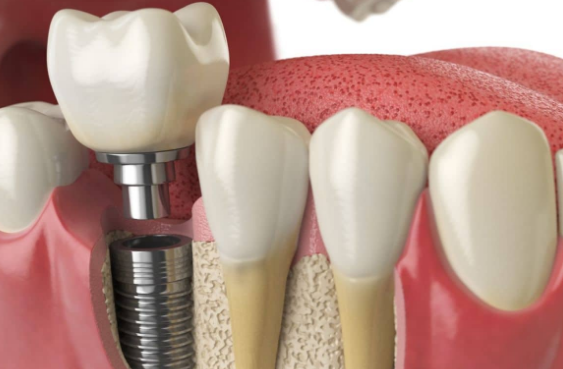
Dental implants replace the missing tooth at the root and the crown. That matters cosmetically because the replacement is designed to sit in the gumline like a natural tooth. A bridge can fill a space, but an implant stands on its own and helps preserve the shape of the area. According to the NCBI overview of dental implants, implants integrate with bone and provide stable support for restorations, which is one reason they can look and feel more natural over time.
This is one of the main cosmetic issues dental implants fix. They close the gap without relying on neighboring teeth for support, which helps the smile look more balanced.
Bone Loss After Tooth Loss Can Age Your Face
One of the hardest parts of tooth loss is that the visible problem is not always just the missing tooth. After a tooth is lost, the bone in that area can shrink because it is no longer being stimulated by a tooth root. That loss can change the way your face looks, especially if several teeth are missing.
You may notice a sunken look around the mouth, thinner lips, or cheeks that seem less supported than before. People often describe this as looking older or tired, even when the change happened slowly. It can feel unsettling because the shift is subtle at first, then one day it is all you see in the mirror.
Implants help address this by acting like artificial tooth roots. They stimulate the jawbone in a way that traditional removable options do not. This does not erase every change overnight, but it can help preserve facial structure and support a fuller appearance. That is a cosmetic benefit with real emotional weight.
Tooth loss is also common enough that you are far from alone. The National Institute of Dental and Craniofacial Research shares data on tooth loss in older adults, showing how many people face this issue as they age. The cosmetic effects are common, but that does not make them easier to live with.
Shifting Teeth and Uneven Spacing Can Make Your Smile Look Crooked
When a tooth is missing, the nearby teeth often start to move. Teeth can tilt into the empty space, the opposite tooth can drift, and spacing can become uneven. What began as one gap can turn into a smile that looks crooked or less even than before.
This is where timing matters. If the space stays open, the surrounding teeth may keep shifting, which can change your bite and create visible asymmetry. You might notice that one side of your smile looks different from the other, or that food catches in places where it never used to.
Dental implants can stop that chain reaction by filling the space and helping maintain alignment. They do not work like braces, but they can prevent further movement and restore symmetry where a missing tooth disrupted it. For people searching for dental implants for smile restoration, this is often a major reason treatment feels worth considering.
Practical Comparison Points Before Choosing Treatment
| Cosmetic Problem | What Happens If It Is Ignored | How Dental Implants Help |
|---|---|---|
| Visible gap from a missing tooth | Smile looks incomplete, confidence often drops, speech may change | Fills the gap with a natural looking replacement tooth |
| Sunken appearance from bone loss | Face may look older, cheeks and lips lose support | Supports the jawbone and helps preserve facial structure |
| Shifting teeth and uneven spacing | Smile can appear crooked, bite may become less stable | Occupies the open space and helps prevent further movement |
Cost is often part of the hesitation. That makes sense. Implant treatment is an investment, and it usually takes more than one visit. Still, the cosmetic problem you see today may become a larger functional and aesthetic issue later. Replacing one missing tooth early can be simpler than correcting bone loss, drifting teeth, and bite changes after years of delay.
Three Steps You Can Take Right Away
1. Pay attention to changes around the missing tooth. Look for shifting teeth, changes in your bite, or a sunken look in the gums or cheeks. These details help you describe the problem clearly during a consultation.
2. Ask for a cosmetic and structural evaluation. A missing tooth is not only about appearance. Ask how the space is affecting bone, nearby teeth, and facial support. A provider offering implant and cosmetic dentist services should be able to explain both sides plainly.
3. Compare replacement options based on long term appearance. Do not focus only on the shortest path or the lowest initial cost. Ask how each option will look in one year, five years, and longer. That question often changes the conversation.
A Stronger Smile Often Starts With One Clear Decision
If you have been living with a gap in your smile, facial changes after tooth loss, or teeth that no longer look as even as they once did, the problem is real and it is treatable. Dental implant treatment can correct some of the most common cosmetic effects of missing teeth while also supporting your long term oral health.
You do not need to keep adapting around a smile that no longer feels like yours. Reach out to an implant and cosmetic dentist and ask what can be restored, what can be protected, and what your next step should be.