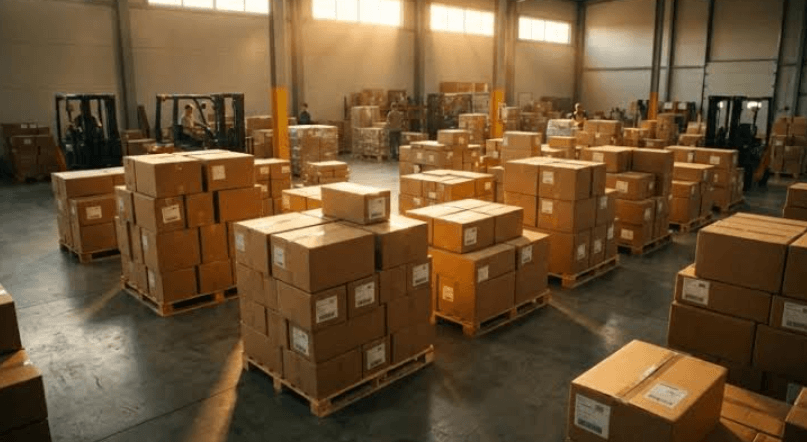
Philadelphia sits at the center of one of the busiest freight corridors on the East Coast. Warehouses, food distributors, manufacturers, and third-party logistics providers throughout the region move enormous volumes of product every week, and pallets are the foundation of nearly every load that moves. Despite how routine pallet procurement seems, it is one of those operational decisions that quietly shapes cost efficiency, worker safety, and supply chain consistency more than most managers initially expect.
When pallet quality varies, product damage increases. When pallet supply is inconsistent, fulfillment schedules slip. When procurement decisions are made without understanding grading standards, businesses often pay more than necessary or accept materials that create problems downstream. This guide is intended to help operations managers, procurement leads, and warehouse supervisors in the Philadelphia area make more informed decisions about how they source, evaluate, and purchase wood pallets.
Understanding the Pallet Market in Philadelphia
Philadelphia’s pallet supply draws from a combination of local pallet manufacturers, regional recyclers, and national distributors with regional depots. The sheer volume of industrial and commercial activity in the area means that used and reconditioned pallets circulate frequently, and new pallets are manufactured in several facilities within reasonable trucking distance. Businesses searching for pallets for sale philadelphia will find a range of options that differ considerably in quality, consistency, and total cost depending on which supplier category they work with.
The anchor in most buying decisions is pallet grade. Grading determines the structural integrity of a pallet, its expected lifespan under load, and its suitability for specific applications such as racking systems, export shipping, or food-grade storage. Without understanding grade distinctions, it is easy to compare prices between suppliers as though the product is identical when in reality the underlying quality may differ significantly.
Suppliers in the Philadelphia market broadly fall into three categories: independent recyclers who collect, sort, and resell used pallets; full-service pallet management companies that offer grading, repair, and consistent inventory programs; and direct manufacturers who produce new or heat-treated pallets. Each has a role depending on what the buyer actually needs.
Why Local Supply Matters for Pallet Procurement
Sourcing pallets locally is not simply a matter of convenience. In a regional market like Philadelphia, local suppliers have better visibility into inventory levels and faster turnaround on fulfillment. For operations that consume pallets at high volume, this means fewer gaps in supply and lower inbound freight costs compared to sourcing from out-of-region distributors.
Local suppliers also tend to offer more flexibility in minimum order quantities, which matters for mid-size operations that cannot absorb a full truckload at once. In practice, a warehouse that can call a regional supplier and receive a delivery within a day or two is better positioned than one waiting on a shipment from a distant distribution hub. Reliability at the supply level directly protects reliability at the shipping level.
Pallet Grades Explained: What the Classifications Actually Mean
Pallet grading is not standardized across the entire industry in the same way that some other commodity grades are. However, most suppliers operating in established markets use a set of broadly accepted grade designations that allow buyers to communicate expectations clearly. Understanding what each grade describes helps procurement teams set specifications before requesting quotes rather than after receiving pallets that do not meet operational requirements.
Grade A Pallets
Grade A pallets, sometimes referred to as premium recycled pallets, are used pallets that have been inspected and confirmed to be in structurally sound condition with minimal cosmetic damage. Boards are intact, there are no broken stringers, and the pallet performs consistently under standard load conditions. These are typically the best option for warehouse racking systems, where structural failure carries real safety consequences, and for retail or distribution operations where pallet appearance affects how product is presented at the point of sale.
Many suppliers will not explicitly define what qualifies as Grade A unless pressed, which means buyers should ask for written specifications or request sample lots before committing to a recurring order. A supplier that cannot describe their grading criteria clearly is likely not applying consistent standards to their sorting process.
Grade B Pallets
Grade B pallets have more visible wear and may include minor board damage, some staining, or slight structural imperfections that do not compromise their basic load-bearing function. They are appropriate for floor-level storage, internal movement within a facility, or applications where pallets are used once and discarded rather than cycled repeatedly through a system.
Businesses that use pallets primarily for outbound shipping to customers who will not return them often find Grade B material to be a practical and cost-effective choice. The lower price per unit reflects the reduced lifespan and narrower range of suitable applications, not necessarily an unusable product.
Heat-Treated and Export-Compliant Pallets
Any business shipping internationally needs to be aware of ISPM-15, the international phytosanitary standard that governs the treatment of wood packaging materials used in global trade. Pallets that have been heat-treated and marked with an approved stamp meet this standard and are required for most cross-border shipments. The International Plant Protection Convention oversees the framework under which these regulations operate, and non-compliant pallets can result in shipment rejection at the point of entry.
In the Philadelphia market, heat-treated pallets are available from several suppliers, but not all stocked inventory will be ISPM-15 compliant by default. Buyers should verify compliance explicitly rather than assuming that new or premium-grade pallets automatically meet export requirements.
Price Factors That Affect What You Actually Pay
Pallet pricing is influenced by a range of variables that extend well beyond the base cost per unit. Buyers who compare supplier quotes without accounting for these factors often find that the lower quoted price does not hold through delivery, or that the cost per usable pallet ends up higher than anticipated once damage and rejection rates are factored in.
Volume and Delivery Frequency
Suppliers offer better pricing at higher volume thresholds, which is standard across most commodity categories. However, the structure of that pricing matters. A supplier willing to provide consistent pricing on weekly or bi-weekly deliveries at moderate volume is often more valuable than one offering a steep discount on a single large order that then creates storage constraints or quality inconsistency on follow-up orders.
Delivery frequency also affects your effective carrying cost. Receiving pallets in smaller, more frequent batches ties up less floor space and reduces the risk of holding inventory that degrades in outdoor or semi-covered storage conditions before it is used.
Rejection and Replacement Rates
One of the more underappreciated cost factors in pallet procurement is how many pallets arrive in a condition that makes them unusable for the intended application. A supplier delivering pallets at a lower price per unit but with a higher rejection rate may ultimately cost more per usable pallet than a supplier with a slightly higher quoted price and tighter quality control.
Businesses that do not track rejection rates systematically often cannot see this pattern until the cost differential becomes significant. Before committing to a supplier, asking about their return and replacement policy is a practical starting point for understanding how they handle quality variability on their end.
Comparing Supplier Types in the Philadelphia Area
Not every supplier category serves the same operational need. Choosing the right type of supplier requires being clear about what the operation actually demands in terms of volume, consistency, grade specification, and turnaround time.
Independent Recyclers
Independent pallet recyclers typically collect discarded pallets from manufacturers, retailers, and distribution centers and resell them after basic sorting. Their inventory is often wide in variety and lower in price, but quality consistency can fluctuate based on what has come through their collection stream recently. For operations with flexible grade requirements or those using pallets for short-cycle applications, independent recyclers can provide meaningful cost savings.
The tradeoff is that independent recyclers may not be able to guarantee consistent grade compliance across every order, particularly if demand spikes or their collection volumes shift. Businesses that depend on precise specifications for racking or retail applications may find this variability difficult to manage.
Full-Service Pallet Management Companies
Full-service providers offer a more structured approach, typically including grading programs, repair services, scheduled delivery programs, and defined specifications per grade level. These companies often serve larger accounts with ongoing procurement needs where operational consistency outweighs the priority of lowest possible unit cost.
For operations managing pallets across multiple facilities or requiring documented grade compliance for audits or customer requirements, working with a full-service provider creates clearer accountability and reduces the internal labor needed to inspect and sort incoming material.
Direct Manufacturers
New pallet manufacturers offer the advantage of known specifications from the point of production. Every pallet meets a defined structural standard because it has not yet entered a use cycle. The cost per unit is higher, but for applications where consistency and load integrity are critical — refrigerated environments, pharmaceutical distribution, heavy industrial products — new pallets from a direct manufacturer may be the only appropriate choice.
Some manufacturers also offer custom configurations or specific lumber grades on request, which allows procurement teams to match the pallet exactly to the product and handling environment rather than adapting product handling to whatever pallet is available.
Building a Procurement Approach That Holds
Effective pallet procurement is not about finding the cheapest source and placing recurring orders. It requires matching the grade and supplier type to the specific application, monitoring quality consistently, and building supplier relationships that allow for honest communication when quality or supply issues arise.
Operations that approach pallets as a commodity interchangeable across sources tend to absorb higher hidden costs over time through product damage, rejected material, storage complications, and fulfillment delays. Those that treat pallets as a defined input with real specifications and performance requirements tend to manage their overall supply chain more predictably.
For Philadelphia-area businesses that move product regularly and depend on pallet consistency to maintain throughput, the investment in understanding grade distinctions and supplier capabilities pays off in operational stability rather than just unit cost reduction.
Closing Thoughts
The Philadelphia pallet market offers genuine range in terms of grades, suppliers, and price points. That range is an advantage for buyers who understand what they need, and a source of unnecessary cost and disruption for those who do not. Establishing clear grade specifications before engaging suppliers, tracking rejection and replacement rates over time, and selecting supplier types that match the operational profile of the business are the practical steps that separate well-managed pallet procurement from reactive purchasing.
Whether a business is sourcing pallets for high-turnover distribution, rack storage, export shipping, or internal material handling, the principles that govern a sound procurement decision remain consistent: define the requirement, evaluate the supplier against it, and monitor performance after the first order rather than assuming that an initial positive experience reflects a reliable ongoing standard. In a busy regional market like Philadelphia, those disciplines make the difference between a supply function that supports operations and one that quietly undermines them.