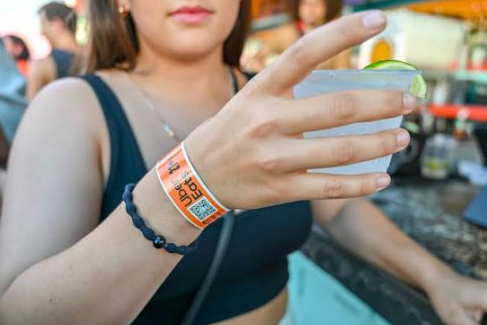
At a growing number of festivals, concerts and sporting events, the most important item an attendee carries is no longer a paper ticket or a wallet. It is a fabric wristband with a small chip sewn inside, and it may handle entry, payments, locker access and sponsor activations over the course of a single weekend.
For organisers, the shift to RFID and NFC wristbands has changed how events are run, from the queue at the gate to the data that shapes next year’s line-up. For attendees, it has mostly made things faster, along with the occasional moment of confusion when a phone suddenly reacts to the band on their wrist.
From paper tickets to a chip on the wrist
Paper and printed tickets had obvious weaknesses at large events. They were easy to forge, slow to check and impossible to cancel once lost. Barcodes on phones helped, but still needed a scanner to see a screen that might be cracked, dimmed or out of battery.
A wristband with an embedded chip solves several of those problems at once. It cannot easily be passed to someone else once it is fastened, it does not depend on a phone battery, and it can be deactivated and reissued if it is lost. Readers at the gate can check a band in a fraction of a second, which matters when tens of thousands of people arrive within a few hours.
See also: Healing the Whole Family: Combining Family Intervention and Heroin Addiction Care in Victoria, BC
What the wristband actually does
Depending on the event, the same band can take on several jobs:
- Access control: different zones, such as general admission, VIP areas or backstage, can be opened only to the bands that are allowed in.
- Cashless payments: attendees link a card or top up a balance before arriving, then tap the band at bars and food stalls. Queues move faster because there is no cash or card handling at the counter.
- Lockers and services: the band can open a locker or confirm a camping pitch without a separate key.
- Sponsor activations: tapping at a brand stand can share content or enter a competition without filling in a form.
Most of this runs on high-frequency tags at 13.56 MHz, the same family of technology used in contactless cards, while some large venues use longer-range UHF tags at entry gates where speed matters more than precision.
Why organisers have moved so quickly
The commercial case is easy to see. Faster entry means shorter queues and fewer people missing the start of a set. Cashless payments speed up service and tend to make it easier for attendees to spend, which matters for events that depend on bar and food revenue. Fraud from counterfeit tickets drops sharply when entry depends on a chip rather than a printed code.
There is also an operational benefit that attendees rarely see. Organisers get a clear, anonymised picture of how people move through a site, which areas become crowded at which times, and where queues build up. That information helps with safety planning and with laying out the site more sensibly the following year.
The attendee’s side of the experience
For most people, the wristband simply makes the day easier. There is less to carry, less to lose and less time spent in lines. The main friction points are practical ones: remembering to register the band before arriving, setting a sensible top-up limit, and claiming any unused balance afterwards, since policies on refunds vary from event to event.
Another common surprise involves phones. Because the band uses the same contactless technology that many smartphones can read, a phone held close to the wrist sometimes displays an unexpected alert. For anyone wondering whether that means something is wrong, this explainer on what the nfc tag detected message means walks through why phones react to cards, passes and wristbands, and when an alert genuinely deserves a second look. It comes from WXR, a manufacturer that has made RFID and NFC tags, including wristbands, for more than 15 years. In the vast majority of cases at an event, the phone has simply noticed the band and has nothing to do with it.
Getting it right as an organiser
Events that handle the switch well tend to share a few habits. They test the readers and the network on site well before the gates open, because a payment system that depends on a weak connection will fail at the busiest moment. They choose wristbands suited to the conditions, with waterproof tags for outdoor festivals and secure closures that cannot be removed and reused. They communicate clearly, so attendees know how to register, top up and claim refunds before they arrive, and they keep a small cash or card fallback for the moments when technology inevitably hiccups.
Where it goes next
The wristband has already moved beyond festivals into theme parks, resorts, cruise ships and conferences, anywhere a single object can replace a ticket, a key and a payment method. The technology inside is not new. What has changed is how comfortable people have become with tapping instead of queuing.
For organisers, the lesson is that a small, inexpensive chip can reshape the whole flow of an event. For attendees, it is one less thing to worry about, as long as the band is registered, topped up and fastened properly before the music starts.